

Switch Overheating or Socket Sparking? How the Right Modular Switches And Sockets Can Improve Electrical Safety
- electric switches, Electrical, HPL India, Switches
- November 20, 2026
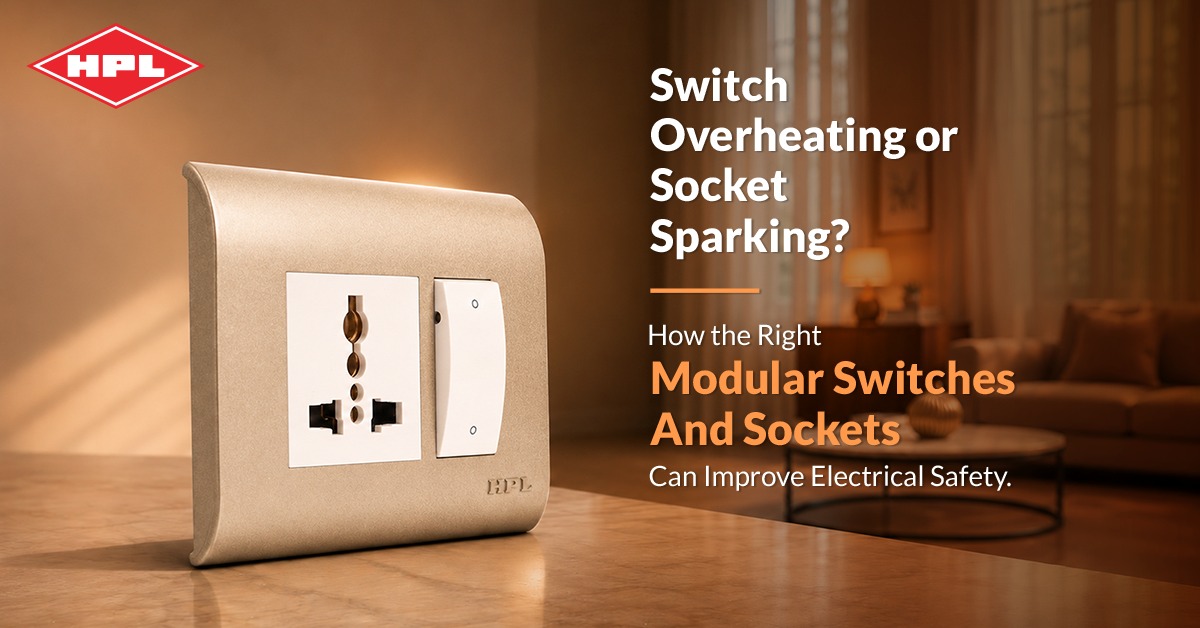
The right modular switches and sockets improve electrical safety through secure terminal connections, durable contact materials, suitable current ratings and flame-retardant insulation. These features help reduce loose connections, excessive heat and electrical arcing. Correct wiring, proper installation and suitable MCB protection are equally important to prevent overheating and socket sparking.
Switch overheating and socket sparking are common electrical concerns that can point to problems with wiring, contact quality, electrical load or component performance. Understanding why these issues occur and how different components contribute to electrical safety can help prevent avoidable damage. This blog explains the causes of overheating and sparking, the role of properly designed modular switches and sockets, and the factors to consider when selecting electrical accessories for a safer home :-
Why do switches overheat or sockets produce sparks?
Heat and sparking usually develop when electrical current encounters resistance, an unstable connection or an unsuitable contact point. Identifying the cause helps prevent further damage :-
Common cause | What happens | Possible consequence |
Loose wire connections | Poor contact increases resistance at the terminal | Heat builds up around the connection |
Worn-out contacts | Repeated switching or plugging can weaken contact surfaces | Arcing, crackling and intermittent power supply |
Excessive electrical load | An appliance draws more current than the switch or socket is designed to handle | Overheating, insulation damage and possible fire |
Poor-quality components | Weak contact materials or inadequate construction affect electrical continuity | Unstable connections and premature wear |
Damaged wiring | Broken conductors or deteriorated insulation interfere with current flow | Short circuits, sparking and electric shock risks |
A useful distinction : A brief, tiny spark can sometimes occur while connecting a plug, particularly with an appliance drawing current. Repeated, loud or visible sparking, burning smells, discolouration and unusual heat should never be dismissed. The Ministry of Consumer Affairs also identifies arcing sounds, hot sockets and repeated breaker trips as warning signs.
How does electrical resistance cause overheating?
Electrical resistance determines how much a conductor opposes the flow of current. A loose terminal or weakened contact reduces the effective contact area, increasing resistance at that point.
The resulting heat can damage the surrounding insulation and gradually weaken the connection further. A damaged contact may then produce electrical arcs when current jumps across a small gap instead of flowing through a stable connection.
Repeated arcing can leave burn marks, carbon deposits and damaged contact surfaces. Continued use can eventually cause the switch or socket housing to melt.
Why does socket overloading increase the risk?
Every switch and socket has a specified current rating. Connecting appliances that demand more current than the socket and associated wiring can safely carry increased thermal stress.
For example, running a high-power room heater through a 6A socket using an adapter does not make the arrangement suitable for that appliance. The correct socket rating, circuit wiring and protective device must all match the electrical load.
How the right modular switches and sockets help reduce electrical risks
Selecting suitable modular switches and sockets involves more than checking their appearance or plate design. Internal contacts, terminal construction, insulation materials and safety mechanisms influence how reliably they perform during everyday use :-
1. Silver-nickel contacts support reliable switching
Electrical contacts connect and disconnect the circuit whenever someone operates a switch. Frequent switching exposes these components to electrical and mechanical stress.
Silver-nickel contacts are valued for their electrical contact performance, resistance to wear and ability to withstand repeated switching. Quality contact construction helps maintain stable electrical connections and reduces the likelihood of contact deterioration
2. Secure terminals help prevent loose connections
Loose terminals can create small contact gaps, allowing resistance and temperature to rise around the wiring connection.
Captive screws help retain the terminal fastening hardware during installation and servicing. Properly designed terminals also allow electricians to secure conductors firmly, reducing the likelihood of connections loosening during normal use.
Correct wire preparation, conductor size and tightening remain equally important. Even a well-designed switch cannot compensate for poorly executed wiring
3. Flame-retardant insulation limits fire-related risks
The insulating housing protects internal electrical components and separates users from live parts. Material quality becomes particularly important when electrical accessories experience heat during operation.
High-grade flame-retardant engineering plastics, including flame-retardant polycarbonate, offer better resistance to heat and flame propagation than unsuitable conventional plastics. Such materials help reduce the likelihood of the housing contributing to fire spread.
However, flame-retardant construction does not make a product immune to overheating or eliminate the need for correct electrical installation
4. Protective shutters improve socket safety
Socket openings can expose users, particularly children, to accidental contact with live electrical components.
Spring-loaded safety shutters remain closed when a suitable plug is not inserted. The mechanism helps prevent foreign objects from entering the live openings, reducing the risk of accidental contact
5. Strong socket contacts maintain a stable plug connection
Repeated insertion and removal can gradually affect the grip between a plug and socket. Weak contact pressure may cause intermittent connections, localised heating and sparking.
Hardened phosphorus-bronze contacts offer useful mechanical strength and contact performance. Properly designed socket contacts help maintain a firm connection with compatible plugs during regular use.
Product designs incorporating these features, including silver-nickel switch contacts, captive screws, dual spark-shield protection, flame-retardant polycarbonate and phosphorus-bronze socket contacts, provide useful benchmarks when evaluating electrical accessories
Why modular switches and sockets need proper MCB protection
Switches and sockets control the supply of electricity to appliances but they do not independently protect an entire circuit against excessive current. A suitable Miniature Circuit Breaker (MCB) provides protection by disconnecting the circuit during overloads and short circuits.
Consider a kitchen where a microwave, induction cooktop and electric kettle operate simultaneously. Excessive current flowing through an inadequately designed circuit can cause wiring and connections to overheat. A correctly selected MCB helps interrupt the supply when the current exceeds its designed operating limits.
A safe electrical installation requires coordination between :-
- Modular switches and sockets : Must have appropriate ratings for the connected appliances
- MCBs : Protect circuits against overloads and short circuits
- RCCBs : Detects residual current caused by leakage and helps reduce electric shock risks. RCCBs do not replace MCBs
- Electrical wiring and earthing : Must have suitable conductor sizes, insulation and effective earthing arrangements
People comparing MCB manufacturers in India should examine product ratings, applicable BIS standards, testing and suitability for the intended electrical installation. Evaluating these factors alongside modular accessories helps create a more dependable electrical system
What should you do when a switch overheats or a socket sparks?
Visible sparks, burning smells or unusually hot switchboards require immediate attention. Continuing to use the affected electrical point can worsen the damage :-
Warning sign | Recommended action |
Switch feels unusually hot | Stop using it and arrange an electrician’s inspection |
Socket produces repeated sparks | Disconnect the appliance only when safe and keep the point unused |
Burning smell or black marks | Treat the situation as urgent and arrange professional inspection |
MCB trips repeatedly | Get the circuit checked instead of repeatedly resetting the breaker |
Switchboard makes crackling sounds | Stop using the affected point and arrange an electrical assessment |
Never open a live switchboard, tighten electrical terminals while the supply is on or attempt to clean burnt contacts yourself. Disconnect the supply only when it is safe to do so. Avoid touching damaged fittings, exposed wires or wet electrical surfaces. Contact a qualified electrician; seek emergency assistance if smoke or fire develops
How to choose reliable modular switches and sockets?
Product selection should go beyond appearance and price. Buyers should examine the internal components, contact materials and safety mechanisms that influence electrical performance and long-term reliability :-
- Appropriate current ratings : Choose 6A, 10A, 16A or 20A switches and suitably rated sockets according to appliance load and circuit specifications
- Silver-nickel contacts : Prefer silver-nickel switch contacts for reliable electrical contact, resistance to wear and consistent performance during repeated switching operations
- Secure terminal construction : Look for captive screws that remain attached during installation, helping electricians secure wire connections without losing fastening components
- Flame-retardant housing : Choose Polycarbonate-FR housings with high-grade flame-retardant properties to help limit flame propagation during electrical faults
- Spark-shield protection : Check for dual spark-shield protection in switches to provide an additional barrier against exposure to electrical sparks
- Protective socket shutters : Prefer sockets with spring-loaded safety shutters that cover live openings when compatible plugs are not inserted
- Hardened socket contacts : Look for hardened phosphorus-bronze contacts that provide mechanical strength and maintain reliable plug-to-socket connections
- 8. Product compliance : Check RoHS compliance, applicable BIS standards and relevant certification markings to assess material and product conformity
The Bureau of Indian Standards specifies requirements for domestic switches under IS 3854:2023 and household plugs and socket-outlets under IS 1293:2019, including applicable amendments. Buyers can use these standards as references when assessing product compliance.
People researching the best electrical companies in India should also consider the manufacturer’s product range, quality-control practices, technical specifications and compliance with relevant standards. A manufacturer offering switches, sockets and protective switchgear can help buyers evaluate different components within the same electrical ecosystem.
Choose reliable modular switches and sockets for a safer home
Electrical safety begins with choosing components designed to handle everyday electrical demands reliably. Loose connections, worn contacts and excessive loads can compromise even a well-planned electrical installation.
At HPL, we focus on product engineering features such as silver-nickel switch contacts, hardened phosphorus-bronze socket contacts, captive screws, flame-retardant polycarbonate housings and dual spark-shield protection. Our range of modular switches and sockets combines these design considerations with functional choices for different electrical requirements. Backed by our wider electrical solutions, including MCBs, we aim to support dependable electrical installations.
Explore our modular switch range at HPL and choose electrical accessories that meet your home’s requirements. For product specifications or assistance, contact our team today.
Frequently Asked Questions
1. Why does a switch become hot during use?
A switch may become hot due to loose wiring, worn contacts, excessive electrical load or internal damage. Stop using it and arrange an electrician’s inspection.
2. Is a small spark when plugging in an appliance normal?
A brief, tiny spark can sometimes occur when connecting an appliance under load. Repeated, loud or visible sparking requires immediate electrical inspection.
3. Can a faulty socket cause an electrical fire?
Yes. Loose connections, damaged contacts and overloading can generate excessive heat or electrical arcs, potentially damaging insulation and increasing the risk of fire.
4. Do MCBs prevent socket overheating and electrical fires?
MCBs interrupt circuits during overloads and short circuits. However, they cannot prevent every cause of overheating, such as loose terminals or damaged contacts.
5. How often should modular switches and sockets be replaced?
Replace switches or sockets when they show cracks, burn marks, unusual heat, loose fitting or repeated sparking. Age alone does not determine replacement needs; condition and safety matter.
Enquire Now
Category
Latested Post
- Switch Overheating or Socket Sparking? How the Right Modular Switches And Sockets Can Improve Electrical Safety
- Latest Consumer Lighting Solutions for Modern Homes

- What Features Should You Look for in a Smart Meter? 7 Specifications That Matter

- How Can a Digital Energy Meter Help You Keep Track of Electricity Usage?

- What Makes the Best Switches For Home In India Fire-Resistant? Understanding Flame-Retardant Materials, Arc Control & Indian Safety Standards

- Air Circuit Breaker vs MCCB: Which Is Better for Main Incomers in Large Commercial Buildings?

- How to Choose the Best Modular Switches in India: A Room-by-Room Guide for Your New Home

- Tips to Choose the Best Spike Guard for High-Power & Sensitive Electronic Devices

- How to Ensure Power Continuity During ATS Maintenance Using a Bypass Changeover Switch
- How to Choose the Right Solar LED luminary for Roads, Parks and Commercial Areas