
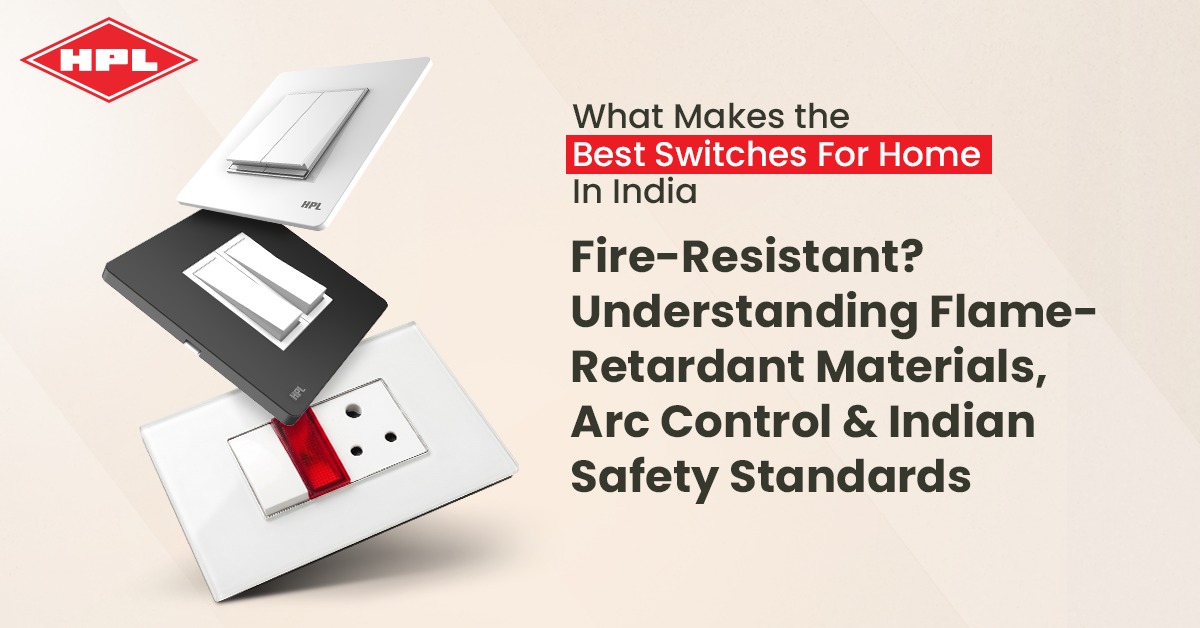
What Makes the Best Switches For Home In India Fire-Resistant? Understanding Flame-Retardant Materials, Arc Control & Indian Safety Standards
- Electrical, HPL India, Switches, Switchgears
- August 21, 2026
Every day, we switch on lights, fans, air conditioners and kitchen appliances without thinking about what happens behind the wall plate. Yet many electrical fires start from hidden problems such as loose connections, overheating, poor contact pressure, repeated sparking & low-quality switch components. As Indian homes continue to use heavier electrical loads, choosing the best switches for homes in India becomes the biggest safety decision and not just a design choice. A well-made switch must control heat, resist flame spread and maintain reliable electrical contact for years. To understand what truly makes a switch safer, let us first know what “fire-resistant” actually means.
What makes a switch truly fire-resistant
It’s a common misconception that a fire-resistant switch is completely fireproof. That is not true-
- fire-resistant means the switch can withstand heat for a period & help slow the spread of fire
- flame-retardant means the material does not continue burning once the ignition source is removed
- heat-resistant means it can tolerate elevated temperatures without deforming quickly
- non-combustible generally does not apply to plastic switch bodies
During a short circuit, loose connection or abnormal heating – the switch body should help limit flame spread and stop burning once the fault is removed. This self-extinguishing behaviour is one of the key reasons quality modular switches in India use high-grade flame-retardant engineering plastics such as polycarbonate. These materials – maintain their shape better at elevated temperatures, resist cracking and reduce the chances of molten plastic contributing to fire spread.
The internal construction is equally important. Good switches are designed with low-resistance brass terminals, secure captive screws & reliable contact mechanisms so that heat generation remains controlled during regular use. Features such as silver-alloy contact tips and
spark-shield protection help reduce contact erosion and improve long-term switching reliability.
Where heat actually builds up inside a switch
This is the part most homeowners never see:-
How loose terminals create dangerous heat
Electricity flows through metal contacts inside the switch. When those contacts are tight, resistance stays low. If a terminal becomes loose, resistance increases and heat is produced. A useful real-life example is a mobile charger plug that feels warm after prolonged use. Inside a switch, the same principle applies but the heating can become much more concentrated
Why wrong switch ratings cause overheating
Using a 10A switch for a heavy appliance such as a geyser or large microwave is a common mistake. The switch may work initially but continuous current near or above its rating can damage the contacts over time
What happens during electrical arcing
When a switch is turned off under load – the current does not stop instantly. A tiny electrical arc forms between the separating contacts. That arc can reach very high temperatures for a brief moment. Repeated arcing causes pitting and erosion of the contacts which increases resistance and leads to further heating
How dust and moisture affect switch safety
Kitchen grease, bathroom humidity, coastal moisture and dust accumulation can affect switch contact material and promote oxidation. Oxidized contacts conduct less efficiently and generate more heat
Why arc control matters in modern modular switches
Well-designed modular switches in India do not eliminate arcing completely but it manages it. Arc control in electrical switches depends on:-
- contact geometry
- speed of contact separation
- contact pressure
- and the material used for the contacts
Quality switches often use silver alloy contacts because they resist welding and erosion better than ordinary materials.
This becomes especially important for appliances that create higher switching stress:-
- AC compressors
- geysers
- induction cooktops
- refrigerators
- and inverter-backed circuits
The best electrical switches for Indian homes are usually those that combine good flame-retardant materials with stable contact performance over thousands of operations
Safety marks every homeowner should check before buying
Many people buy switches based on appearance or what the local electrician has in stock. A better approach is to check the safety markings first.
Look for:-
- ISI certified switches
- BIS certification mark
- voltage rating (usually 240V AC for homes)
- current rating (6A, 10A, 16A )
- manufacturer identification
Understanding BIS standards for modular switches in India is useful because certification indicates that the product has been tested against specified safety and performance requirements
Which switch rating is right for each appliance
|
Appliance |
Recommended switch |
|
Lights & fans |
6A / 10A |
|
Refrigerator |
10A |
|
Washing machine |
16A preferred |
|
Microwave |
16A |
|
Geyser |
16A |
|
1–2 ton AC |
16A |
|
Induction cooktop |
16A |
The 30-second checklist before buying a modular switch
Before purchasing any switch, check these six things:-
- ISI/BIS certification is clearly visible
- correct current rating for the appliance
- FR-grade body material
- firm switching action (not loose or spongy)
- trusted manufacturer with technical specifications
- compatibility with proper wiring and MCB protection
If a switch feels unusually light, has unclear markings or lacks certification details, it is worth being cautious
The features that make a real difference in everyday use
Quality modular electrical switches should offer features that improve safety, reduce heat generation and maintain reliable performance for years. Key features include:-
- high-grade flame-retardant polycarbonate body resists flame spread, maintains its shape at elevated temperatures and improves safety during overheating conditions
- silver nickel contacts reduce contact wear, minimise sparking and support smoother and more reliable switching
- high-conductivity brass terminals lower electrical resistance and help control heat buildup during regular use
- dual spark-shield protection adds an extra layer of protection against internal sparking and contact damage
- captive screws and tunnel terminals ensure tighter wiring connections and reduce the risk of loose terminals which are a common cause of overheating
- shuttered sockets improve safety especially in homes with children
- low-noise switching mechanism provides smoother day-to-day operation and reflects better internal design
- BIS (ISI) compliant construction indicates that the switch is designed and tested according to applicable Indian safety requirements
- ROHS compliance ensures the use of safer and environmentally responsible materials
When these features are combined, the result is a switch that is not only safer during faults but also more stable during everyday use with air conditioners, geysers, kitchen appliances, washing machines, inverter loads and other high-demand circuits found in modern Indian homes.
Why HPL is a trusted choice for safe electrical systems
At HPL, we follow an engineering-led approach across our modular switches, switchgear, protection devices, metering solutions and broader electrical infrastructure portfolio. We prioritise certified materials, reliable contacts, thermal performance, endurance and compliance with Indian safety standards. This allows us to deliver solutions that are suitable for both residential and commercial applications where long-term reliability matters.
If you are looking for the best electrical switches for home in India that combine safety, performance, compliance and durability, we aim to offer solutions that support a safer and more dependable electrical system for your space.
Enquire Now
Category
Latested Post
- What Features Should You Look for in a Smart Meter? 7 Specifications That Matter

- How Can a Digital Energy Meter Help You Keep Track of Electricity Usage?

- What Makes the Best Switches For Home In India Fire-Resistant? Understanding Flame-Retardant Materials, Arc Control & Indian Safety Standards

- Air Circuit Breaker vs MCCB: Which Is Better for Main Incomers in Large Commercial Buildings?

- How to Choose the Best Modular Switches in India: A Room-by-Room Guide for Your New Home

- Tips to Choose the Best Spike Guard for High-Power & Sensitive Electronic Devices

- How to Ensure Power Continuity During ATS Maintenance Using a Bypass Changeover Switch

- How to Choose the Right Solar LED luminary for Roads, Parks and Commercial Areas

- 7 Ways to Reduce Industrial Energy Costs Using Multifunction Meters

- 6 Critical Roles of a Multifunction Energy Meter in Modern Electrical Systems