
7 Ways to Reduce Industrial Energy Costs Using Multifunction Meters
- Electrical, HPL India, meter
- June 1, 2026
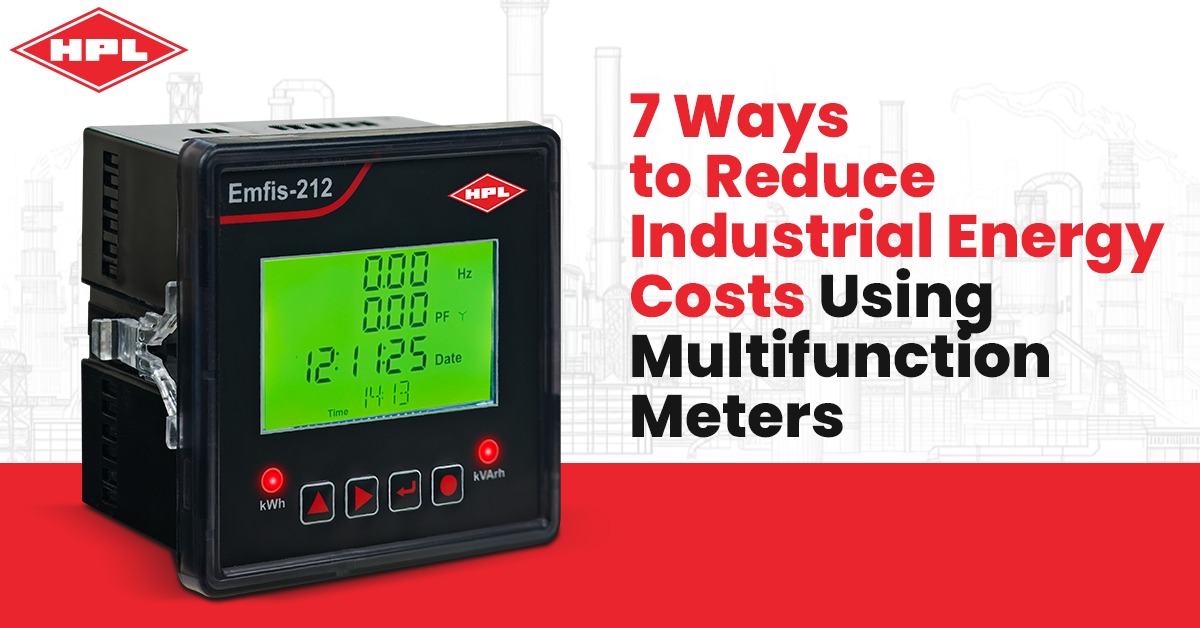
In most industrial facilities, energy cost variation is rarely linked only to production output. Instead, fluctuations are often traced to electrical inefficiencies that remain unnoticed during daily operations. Typically, issues such as idle loads, poor power factor, voltage imbalance and sudden demand spikes contribute significantly to excess consumption. As a result, a considerable portion of energy does not translate into productive output.
At the same time, while data is available in most setups – it is often scattered or not detailed enough to support clear decisions. The focus shifts from just measuring consumption to understanding how energy behaves across systems. In this context, a Multi Function Meter plays a critical role by providing multi-parameter visibility, enabling accurate monitoring of electrical performance and forming a strong foundation for identifying cost reduction opportunities.
7 Ways Industrial Plants Reduce Costs Using Multi Function Meters
Here’s how:-
1. Catching Hidden Energy Losses
In many plants, energy continues to flow even when production stops. Machines remain in standby, compressed air systems leak and lighting stays active longer than required.
With proper monitoring:-
- Base load during non-working hours becomes visible
- Circuits with constant consumption can be identified
In several cases, plants find that 5-8% of total energy is not contributing to output.
2. Managing Peak Load Spikes
Maximum demand penalties often increase bills by 15-20%. The issue is not continuous load but short-duration spikes.
With MFMs:-
- Peak timings can be tracked
- High-load operations can be identified
- Load scheduling becomes easier
As a result, plants can avoid unnecessary penalties without reducing actual production.
3. Monitoring PF Fluctuations
Even after installing capacitor banks, penalties continue in many setups due to fluctuating power factors.
With continuous tracking:-
- PF trends can be monitored in real time
- Malfunctioning correction systems can be detected early
Maintaining PF close to 1 improves both billing efficiency and system performance.
4. Detecting Power Quality Issues Early
Power quality issues are often ignored until equipment starts failing. However, they silently increase energy consumption.
Common problems include:-
- Harmonics
- Voltage imbalance
- Phase distortion
Even a 2-3% voltage imbalance can reduce motor efficiency leading to higher energy usage and equipment stress.
5. Making Smarter Decisions Between DG and Grid
Diesel generators are significantly more expensive than grid power, yet many plants rely on them longer than needed.
With proper data:-
- Cost per unit can be compared (DG vs grid)
- DG efficiency can be tracked over time
Some plants reduce DG usage by 10-15% after analysing real cost patterns.
6. Balancing Load Across Phases
Unbalanced loads are common especially in older electrical setups. This leads to:-
- Overheating
- Increased losses
- Reduced equipment life With phase-wise monitoring:-
- Load can be evenly distributed
- Stress on systems is reduced
7. Turning Data Into Daily Decisions
Many plants collect data but do not use it effectively. What works in practice:-
- Weekly review of energy trends
- Identifying abnormal consumption patterns
- Linking energy usage with production output
Plants that follow this approach often see 5-12% improvement in efficiency over time.
Why Just Installing Meters Doesn’t Reduce Costs?
Many facilities already have meters installed, but nothing changes. The gap is:-
- No regular analysis
- No integration with systems
- No ownership of data
Also, accuracy matters. Data coming from low-quality devices can mislead decisions. This is why choosing trusted electrical accessories manufacturers becomes important. The quality of measurement directly affects the quality of decisions.
Where Do These Improvements Create the Most Impact?
The impact of structured monitoring is highest in:-
- High-load manufacturing plants
- Facilities with DG backup
- Plants with fluctuating demand
- Multi-line production setups
In such environments even small inefficiencies can significantly increase overall costs.
How Does HPL Support Reliable Energy Monitoring?
Building real control over energy costs comes from understanding how power flows across every part of the plant. A well-utilised Multi Function Meter brings that clarity by highlighting inefficiencies, system stress points and areas where energy is being wasted without visibility.
At HPL, we focus on delivering that level of insight through a strong range of smart multifunction meters designed for accurate, real-time monitoring in industrial environments. Along with advanced metering solutions – our portfolio also includes a wide range of electrical equipment built to support reliable and efficient operations.
With a strong manufacturing backbone, proven expertise and focus on innovation, we continue to be recognised as the most trusted electrical accessories manufacturing company, helping industries move towards smarter, data-driven energy management.
FAQs
- Can a multifunction meter directly reduce electricity bills?
Not directly. It helps identify inefficiencies and cost leakages. The savings come from the actions you take based on its data. - How often should industrial plants check meter data?Ideally weekly for trends and daily for critical parameters like load, PF and voltage imbalance.
- Is multifunction metering useful for small industries as well?
Yes. Even smaller plants face similar issues like demand spikes and poor PF where monitoring can lead to noticeable savings.
Enquire Now
Category
Latested Post
- How Can a Digital Energy Meter Help You Keep Track of Electricity Usage?
- What Makes the Best Switches For Home In India Fire-Resistant? Understanding Flame-Retardant Materials, Arc Control & Indian Safety Standards

- Air Circuit Breaker vs MCCB: Which Is Better for Main Incomers in Large Commercial Buildings?

- How to Choose the Best Modular Switches in India: A Room-by-Room Guide for Your New Home

- Tips to Choose the Best Spike Guard for High-Power & Sensitive Electronic Devices

- How to Ensure Power Continuity During ATS Maintenance Using a Bypass Changeover Switch

- How to Choose the Right Solar LED luminary for Roads, Parks and Commercial Areas

- 7 Ways to Reduce Industrial Energy Costs Using Multifunction Meters

- 6 Critical Roles of a Multifunction Energy Meter in Modern Electrical Systems

- Practical Surge Protection Checklist for Home Electronics