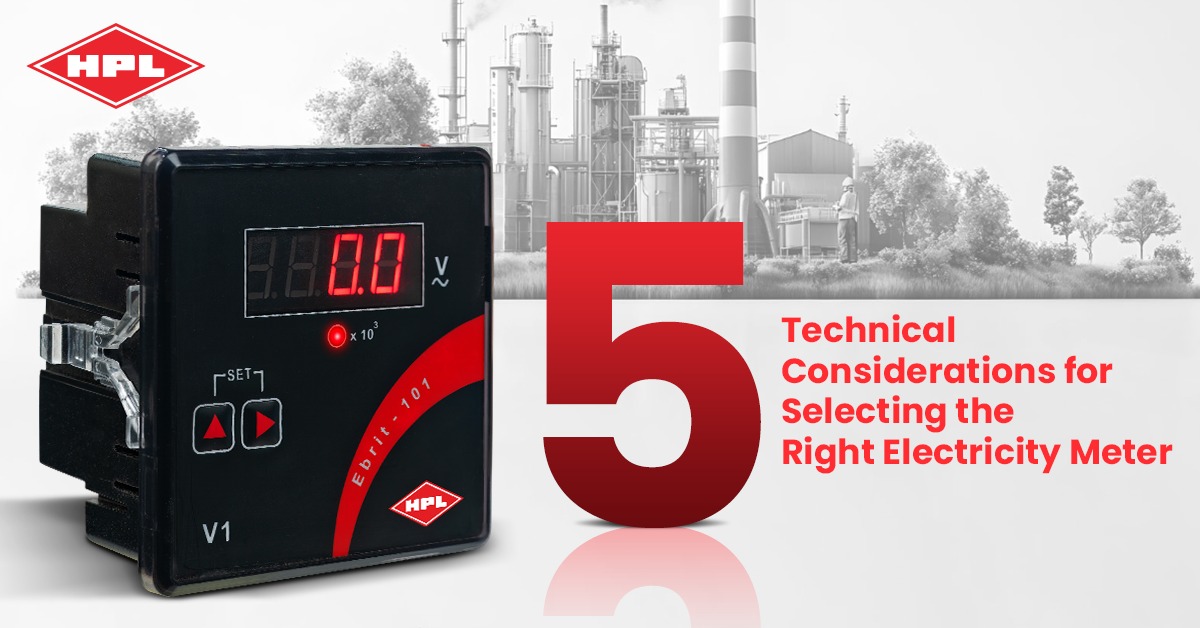
Choosing an electricity meter is one of those decisions that most of us take for granted until things start going wrong. At first, a meter might seem fine but six months or a year down the line you start seeing wrong readings or it stops syncing with newer systems like solar or utility networks. The problem often behind this is the lack of understanding of what really matters before buying one.
This blog walks you through five important technical considerations you should know, so you make a wiser decision.
1. Understand Your Load Behavior
When most people look at electricity meters, they only see the “amp” rating and assume it’s enough. But your actual electrical load behaves very differently in real life.
- In a home, air conditioners, water pumps and induction cooktops switch on and off
- In a factory, motors and compressors draw big surges when
- Solar systems and electric vehicle (EV) chargers change power flow
If you choose a meter only based on the highest amperage, you might be ignoring how your equipment actually draws power. Over time, large starting surges and constantly changing loads can cause internal heating inside the meter, reduce its lifespan and eventually lead to incorrect readings.
Here’s what you should evaluate:
- Is your load mostly motors, heaters or mixed?
- Do heavy loads switch on at peak hours?
- Will your equipment run continuously or in cycles?
A meter that matches your load behavior will last longer and give accurate readings for years.
2. Accuracy
Nearly all meters claim high accuracy when you first install them. But what really matters is how that accuracy holds up after months of heat, dust and voltage fluctuations. Cheap internal components deteriorate over time and the accuracy starts drifting.
- Your electricity bill could slowly drift higher or lower than actual
- Factories may face audit
- Solar power systems might misreport import/export
Rather than just checking the “accuracy class” number, you should look for:
- Components that resist heat and
- How accuracy is maintained over time (not just on paper).
- Certification relevant to real usage
3. Easy to Understand Data
An electricity meter that only shows numbers wears out its value fast. You need data you can interpret. Useful meters should:
- Provide time-based usage records (daily, hourly, monthly).
- Allow data export in formats you can
- Help identify patterns rather than just instantaneous
This becomes critical when:
- You manage a building and need fair billing for
- You operate a factory and need to cut down energy
- You have solar panels and need to track export/import
When chosen correctly, digital energy meters act as simple decision-making tools. They help you understand how, when and where your power is being used, which is what creates real value.
4. Future-Readiness
Most meters in India are expected to stay in place for 10 to 15 years. In that time, technology and regulations change. Remote reading, smart grid integration, solar net metering, utility demand response – all these are becoming common.
If your meter can’t support:
- Remote communication,
- Firmware updates,
- Integration with utility systems,
you will end up replacing it again soon. Even if you don’t need these features today, ensure the meter is not a dead end.
This is why smart meters in India are gaining traction. They help consumers and utilities get real-time insights without manual reading.
5. Durability
Certificates and compliance ratings are only the first step. Actual conditions like heat, dust, moisture and voltage spikes test a meter far more harshly than a lab ever can.
A good meter should:
- Have sturdy casing and quality terminals
- Withstand voltage fluctuations without internal damage
- Detect and report tampering or abnormal events
The difference between a meter that barely meets standards on paper & one that survives real field conditions is huge. Real durability means fewer replacements, fewer disputes and lower long-term cost.
Reliable Meters and Equipment You Can Count On
Choosing the right meter isn’t just about price or brand name. It is about understanding how your electricity usage works today and how it might evolve tomorrow. A well-selected meter adapts to your load, stays accurate over time, provides actionable data, supports future systems and withstands real-world conditions.
At HPL India, we design and manufacture meters and electrical solutions that are tested for Indian conditions and applications. Our range of digital energy meters, smart meters and other
electrical equipment including efficient lighting like Glo led combines reliability, high quality and long-lasting performance.
With HPL, your energy management is in safe hands ensuring efficiency, transparency and durability every step of the way.
FAQs
- Can a wrong meter really affect my bill?
Yes. A meter with drifting accuracy or mismatched load handling can report incorrect usage, leading to higher bills over time.
- Is having a smart meter necessary at home?
Not always but it helps with remote reading and better data insights especially if you plan solar or EV charging later.
- How long should a quality meter last?
With proper selection and good build quality, a meter should reliably work for 10-15 years without major issues.