

Practical Surge Protection Checklist for Home Electronics
- Electrical, HPL India, meter, Switches
- March 3, 2026
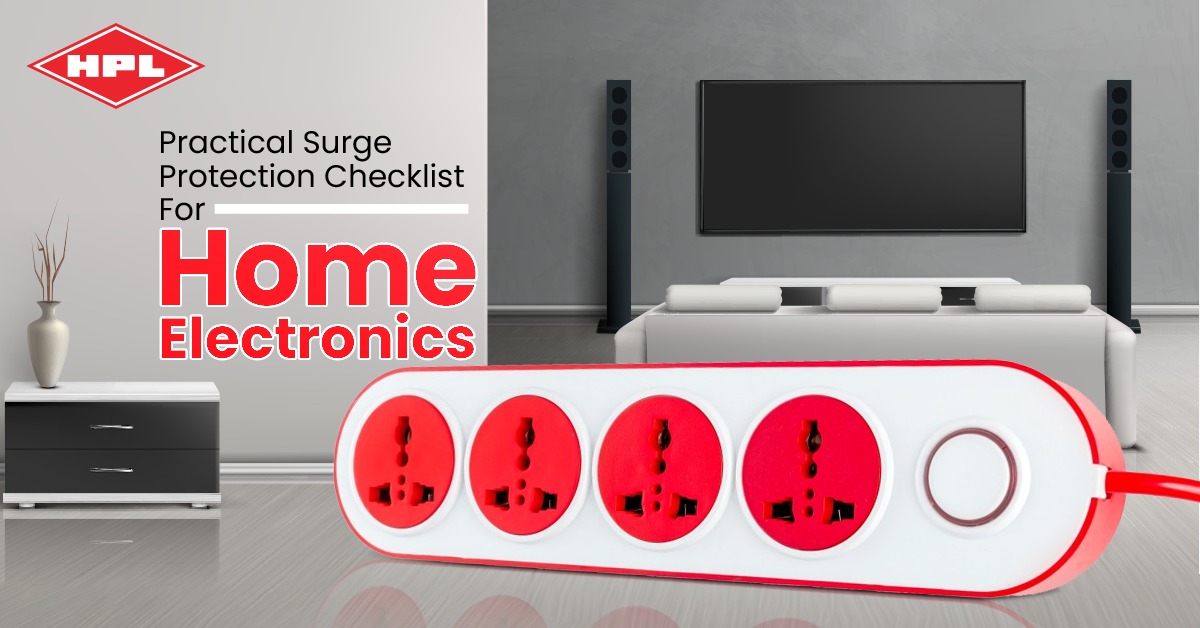
Electrical damage in homes is rarely sudden or visible. In most cases, it develops gradually through repeated exposure to voltage fluctuations & transient surges that go unnoticed. These disturbances degrade internal components of electronic devices reducing reliability and shortening their operational lifespan over time.
This blog presents a practical surge protection checklist designed to help people understand electrical risks and make informed decisions for long-term equipment safety.
How Surges Actually Damage Home Electronics
Electrical surges are not only caused by lightning. The most common surges come from inside the house itself.
- Air conditioners switching on and off
- Refrigerators cycling compressors
- Inverter changeovers
- Voltage imbalance due to weak neutral connections
Most of these are micro-surges. They are small, frequent and invisible. They don’t trip MCBs. They don’t shut power. But they slowly stress circuit boards, power adapters and capacitors. Over time, this leads to random failures, heating issues or sudden death of devices.
If a device fails after two or three years instead of lasting five or six, surge stress is often the hidden reason. In most cases, people replace the device without ever realising that electrical instability caused the damage.
What makes surge-related damage particularly costly is the mismatch between risk and prevention. A spike guard typically costs a fraction of what modern electronics do yet many homes rely on unprotected sockets for devices worth tens of thousands. This imbalance means that even a single unnoticed surge can permanently weaken a television panel, router chipset or laptop motherboard. In practice, spike guards act as a financial buffer as much as a technical one, absorbing damage that would otherwise be transferred directly to expensive electronics.
Misconceptions That Give a False Sense of Safety
Many homes unknowingly rely on assumptions that do not hold up in real conditions:
- MCBs protect against overload, not fast voltage spikes
- Cheap extension boards are not surge protectors
- Earthing in apartments is often weak or shared
- New buildings still face grid instability
Surge protection only works when all supporting conditions are right. Without dedicated surge protection devices, most homes remain exposed even if wiring and breakers are in place.
Practical Surge Protection Checklist That Actually Works
Identify Sensitive Electronics First
Focus on devices with internal power supplies and always-on electronics:
- Smart TVs, routers, Wi-Fi extenders
- Laptops & desktops
- Gaming consoles & sound systems
These are more vulnerable than heavy appliances.
Match Spike Guard Capacity to Usage
The best spike guard is not chosen by socket count alone. It must handle surge absorption and not just power load. Under-rated protection degrades quickly and may continue supplying power while no longer offering protection.
For most households, a properly rated spike guard becomes the most practical and accessible first layer of surge protection for electronics.
Check Important Technical Ratings
- Joule rating indicates how much surge energy can be absorbed
- Clamping voltage shows how quickly excess voltage is blocked
- Response time matters more in unstable grids
Ignoring these numbers is one of the biggest mistakes homeowners make.
Avoid Sharing One Guard Across Multiple High-Value Devices
Overloading does not always mean tripping. Heat builds up internally and weakens protection components faster. This reduces protection life and increases failure risk for all connected devices.
Earthing Decides Whether Protection Works
Even the best surge protection fails without proper grounding. Poor earthing is common in apartments and rented homes. If earthing is weak, surge energy has nowhere to go. In such conditions, spike guards become power strips instead of protection devices.
Understand Indicator Lights Properly
Many spike guards continue supplying power even after protection has failed. The light only confirms power flow, not protection health.
Replace Protection Periodically
Surge protection components wear out. Visual condition means nothing. Regular replacement is safer than assuming lifetime protection.
Room-Wise Protection
- Living room: TVs and routers should not share protection with heavy loads
- Home office: Devices connected to power and data lines face higher risk
- Bedrooms: Overnight charging exposes devices to long surge windows
- Kitchen: Spike guards are usually unsuitable for high-load appliances
Making Electrical Safety a Long-Term Decision
Effective surge protection is not achieved through isolated products but through informed planning and reliable infrastructure. The durability of home electronics depends on how well electrical systems are designed, tested and supported over time. At HPL, as the best and most trusted electrical accessories manufacturers, we focus on consistent quality control, compliance with safety standards and real-world performance testing so that protection systems function reliably beyond initial installation and throughout their service life.
For homes aiming to improve electrical awareness, monitoring also plays an important role. Tools such as a multifunction energy meter help identify irregular voltage patterns and load behaviour before they translate into equipment stress or failure. When combined with well-designed surge protection and quality accessories, such insights allow homeowners to make preventive decisions rather than reactive fixes.
We believe safer homes are built through understanding how electricity actually behaves and choosing components that are engineered for long-term reliability. Our approach is grounded in decades of manufacturing expertise & a commitment to delivering dependable electrical solutions across applications. By following a practical surge protection checklist & relying on trusted systems – homeowners can protect their electronics, reduce hidden risks and create a safer electrical environment with confidence.
FAQs
- How often should spike guards be replaced?
Most should be replaced every 2-3 years depending on usage and surge frequency, even if they look fine. - Do MCBs protect against voltage spikes?
No. MCBs protect against overloads and short circuits, not fast voltage surges. - Is earthing really that important for surge protection?
Yes. Without proper earthing, surge protection cannot divert excess voltage safely.
Enquire Now
Category
Latested Post
- What Features Should You Look for in a Smart Meter? 7 Specifications That Matter

- How Can a Digital Energy Meter Help You Keep Track of Electricity Usage?
- What Makes the Best Switches For Home In India Fire-Resistant? Understanding Flame-Retardant Materials, Arc Control & Indian Safety Standards
- Air Circuit Breaker vs MCCB: Which Is Better for Main Incomers in Large Commercial Buildings?

- How to Choose the Best Modular Switches in India: A Room-by-Room Guide for Your New Home

- Tips to Choose the Best Spike Guard for High-Power & Sensitive Electronic Devices
- How to Ensure Power Continuity During ATS Maintenance Using a Bypass Changeover Switch
- How to Choose the Right Solar LED luminary for Roads, Parks and Commercial Areas

- 7 Ways to Reduce Industrial Energy Costs Using Multifunction Meters

- 6 Critical Roles of a Multifunction Energy Meter in Modern Electrical Systems